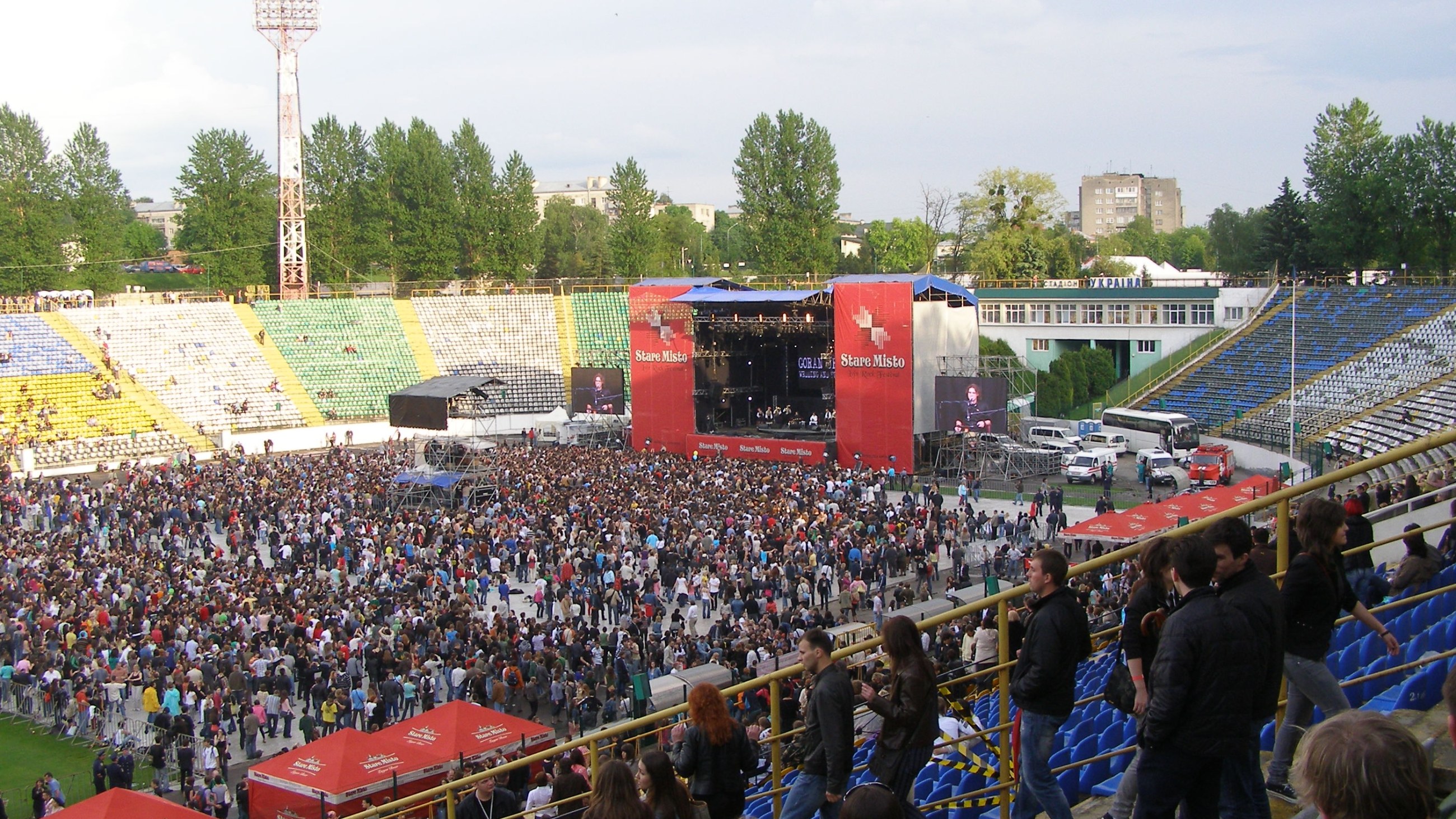
From squats to Coachella: how Ukrainian electronic music became the country's voice in 35 years
TV chart shows, raves in squats, Xlib in Podil, Closer on Nyzhnyoyurkivska, Boiler Room in Sloviansk and three Ukrainians in the world's top 100 DJs. Four eras of one scene — and what it became during the full-scale war.
On 24 August 2026 Ukraine turns 35. A story of exactly the same length has almost never been told as a whole: how a sound that began in squats and on cassettes reached the world's main stages — and why it turned out to be one of the most convincing ways to talk about the country.
We have arranged that story into four eras. Not because it is tidier, but because every turning point of the scene coincided with a turning point of the country.
The facts here rest on a large study of the Ukrainian electronic scene by Suspilne Kultura and on the scholarly periodisation by Oleksandr Zazulin published in the journal Pytannia Kulturolohii.
The nineties: squats, cassettes and the first raves
The first era was spontaneous self-organisation. Television ran the chart show Terytoriia A, which made Ukrainian pop visible for the first time; alongside it worked Van Gogh, Aqua Vita, Fantom-2, Turbo-Techno-Sound and Step — a homemade version of Eurodance built from whatever was at hand.
In parallel there was everything that never reached the airwaves. Svitlana Nianio and her project Tsukor Bila Smert were released on the Polish label Koka Records, while Katya Chilly's album Rusalki in da House effectively founded Ukrainian folktronica. The first raves happened in the Paryzka Komuna squat on Velyka Zhytomyrska, in the Rus hotel and on the grounds of the Kyiv Fortress; the Torba Party series ran from 1995 to 1997 and managed about twenty nights.
The 2000s: glamour against concrete
The second era was commercial institutionalisation. Big imported events arrived: Godskitchen, Global Gathering, Techno Invasion. So did the radio stations Kiss FM and DJ FM, and glossy magazines about clubs. And in parallel came Xlib on Kyrylivska, which deliberately looked to Berlin rather than London.
"There was no posturing there. Nobody paid attention to stars," recalled Vitaliy Bardetskyi, one of the founders of Xlib.
Afrika Bambaataa played at Xlib, and the crews Kievbass, Svoi and Zhiguli/Rewind grew around the club. There was life beyond Kyiv too: in Donetsk the Izolyatsia art centre and the bar Gung'yu'buzz, which produced Yevhen Filatov, the future The Maneken; in Chernivtsi, T-zhuk appeared in 2003 and his track Amaga travelled through global charts. Tomato Jaws were working in the same years — the band ONUKA later grew out of. Xlib closed in 2012.
After 2014: the scene becomes an institution
The third era was the crystallisation of values and the move outward. Closer opened on Nyzhnyoyurkivska in 2013, and everything else grew around it: the festivals Strichka, Brave! Factory and Black! Factory, the rave series Cxema, Ostrov. The scene stopped being purely Kyivan: Kharkiv got Kultura Zvuka, Dnipro the club Module, Lviv Zavtra, Ivano-Frankivsk Detali, Zaporizhzhia Instance.
That was also when Ukrainian names first began appearing on world bills. ARTBAT, Miss Monique and Korolova reached Tomorrowland and Coachella, and in the DJ Mag Top 100 DJs 2025 ranking all three made the list: Korolova at 50, ARTBAT at 73, Miss Monique at 75.
From 2022: cultural resistance
The fourth era began on 24 February. Parties now end at 22:00, half of Closer's residents live in Europe, and an army fundraiser has become a compulsory part of any bill. The scene did not disappear — it rewrote its own purpose.
"Electronic music has to move in the same context as culture. It is so varied that it should not be generalised," said Serhiy Yatsenko, the founder of Closer.
The sharpest symbol of this time is not even a club but a work party: the Repair Together initiative takes people out to rebuild villages in Chernihiv region to DJ sets. And one more symbol is Donbas, which had its own rave culture before the full-scale war: Yevheniy Skrypnyk's Shum Rave worked in Sloviansk, and in the autumn of 2021 Boiler Room came there to film.
What this means in year 35
Laid out in one line, the four eras show something simple: Ukrainian electronic music grew up not when it got money but when it got a reason. The squat gave it freedom, Podil gave it taste, Nyzhnyoyurkivska gave it an institution, the full-scale war gave it a function. That is why the scene today is not only music: it is fundraising, cultural diplomacy and an argument in a conversation where words no longer work. A machine has now joined that same conversation — we looked at it separately in our piece on artificial intelligence in music.
And one more thing. Thirty-five is the age at which you no longer have to prove that you exist. It is enough to play.
As reported earlier by ONE//FM, Independence sounds in four cities at once this week — from the Dovzhenko Film Studio to Berlin's Jägerstraße.
Read also
Toni Braxton celebrates her 59th birthday. Her famous song “Un-Break My Heart” turns 30. We’ve gathered the key facts from the Diva’s life

Dj Tapolsky turns 50 years old. His set began at an embassy in Delhi and still hasn’t ended
ONUKA's Emmy travelled across years — now it heads to grandpa's workshop

Calvin Harris played from a truck — and entered the Guinness World Records

Istanbul pulled Anyma’s show. The reason came only over the phone
This time she's not singing, she's deciding: Jerry Heil will judge Reeperbahn's top prize — and a Ukrainian is nominated

“You’re basically writing eight songs into one”: how a track from a Kyiv studio became a K-pop idol’s solo debut
A great-grandmother’s carol, a line from Skovoroda and a voice from Polissia: a song from Lutsk is now in S.T.A.L.K.E.R. 2

Comments
Loading…