17,000 guests, 20 weddings and the 15 minutes everyone argued about: how Vyrii. Prostoneba went
The second Vyrii gathered 17,000 people at Kyiv's VDNG, two stages and more than 20 artists, from Vakarchuk to GusGus. Yet the loudest discussion afterwards was about a fifteen-minute dance piece on the electronic stage.
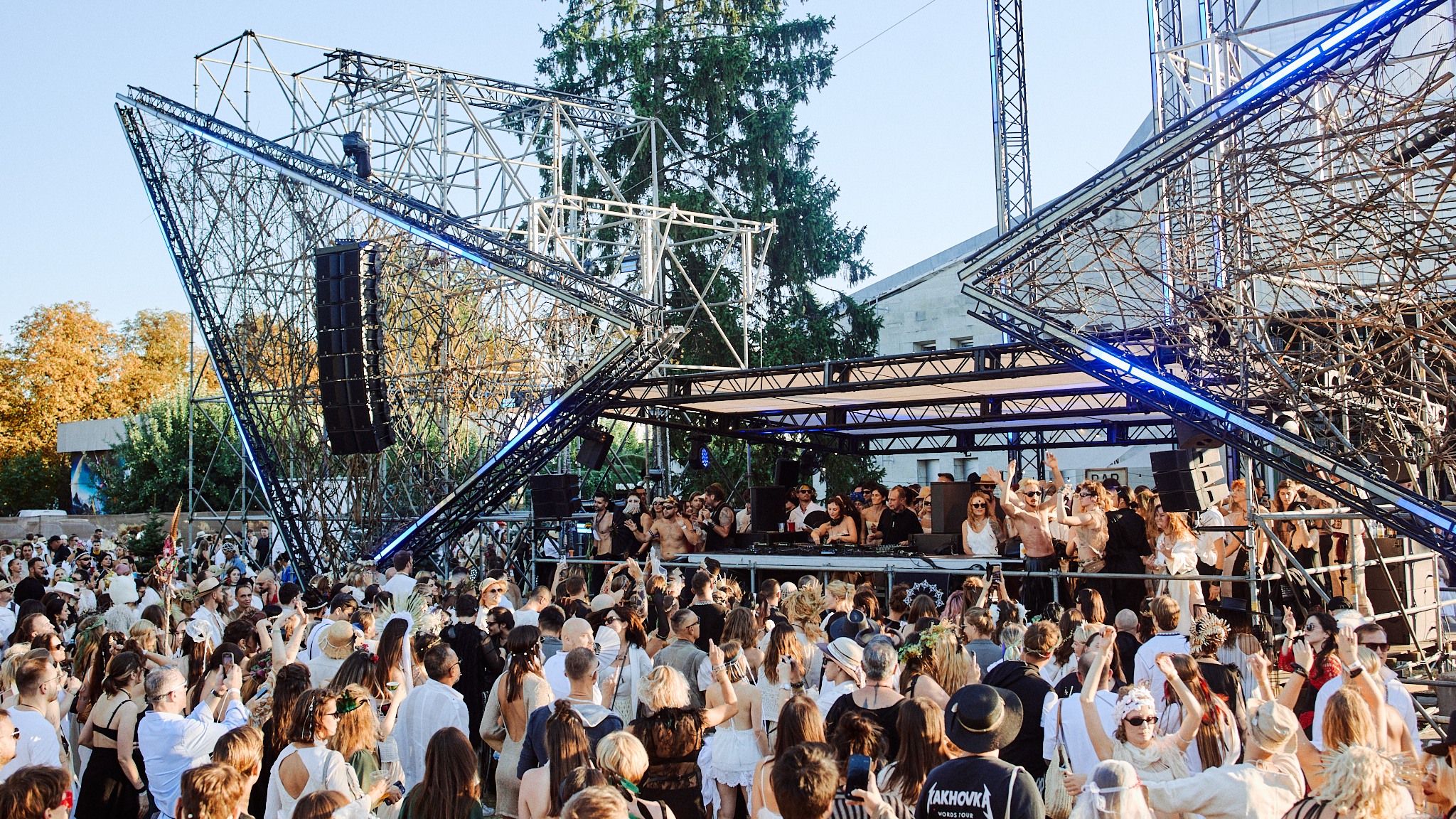
The ethno-electronic event Vyrii. Prostoneba took place for the second time on 8–9 August at the KYT pavilion on the VDNG grounds in Kyiv. Over two days the festival, made by the Kurazh team, drew 17,000 people; every ticket sold out two days before the doors opened, and more than 10% of guests from concession categories got in free.
This was reported by MUZVAR.
Last year's first Vyrii drew 12,000 visitors, so the event grew roughly one and a half times in a year. A one-day ticket cost 2,400 hryvnias, a two-day one 4,000. Veterans, serving soldiers, fighters of the Ukrainian Volunteer Army, people with disabilities, pensioners and children under 12 were admitted free.
Two stages: ethno live and electronic
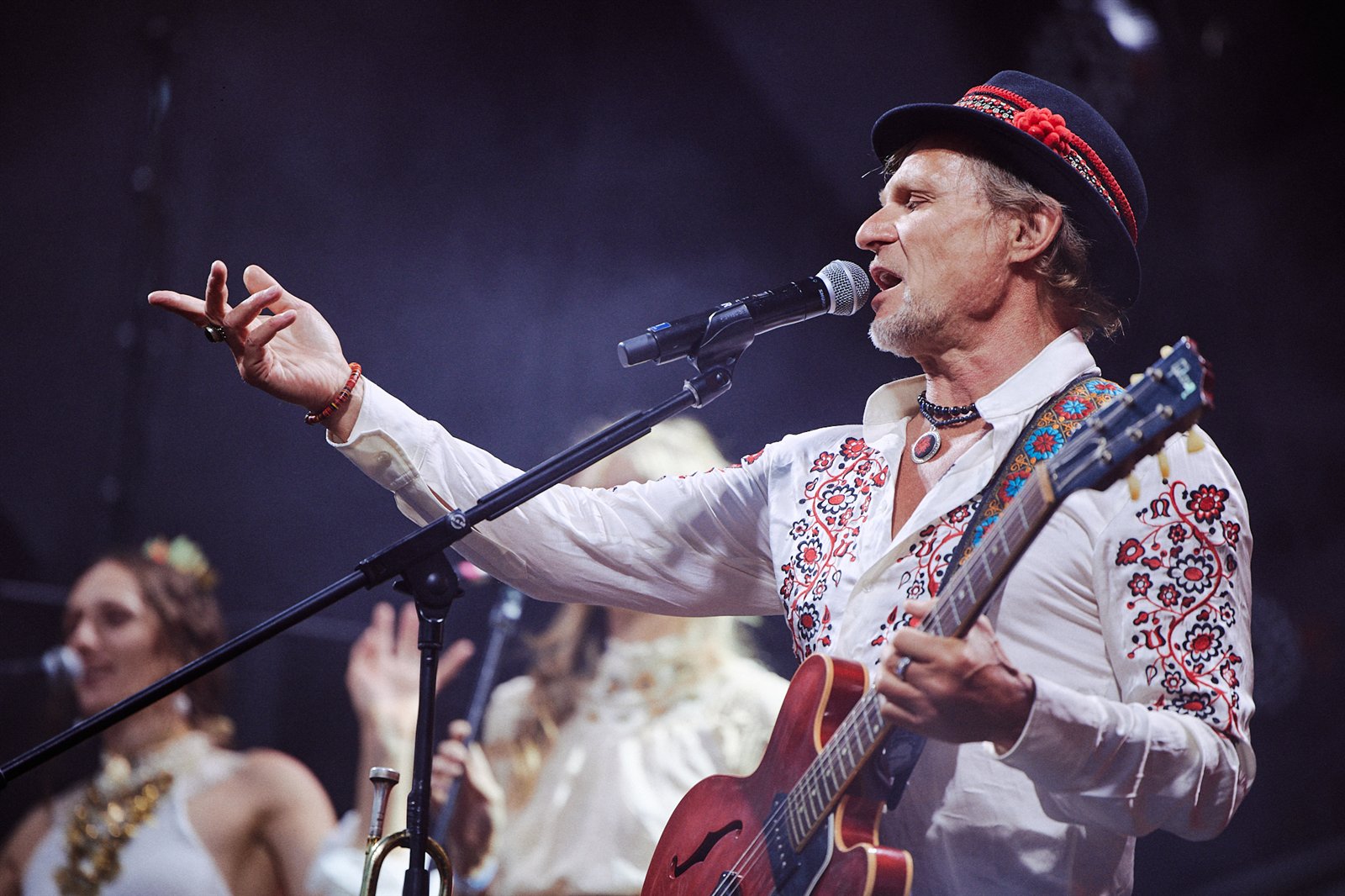
The music was split between two stages officially named Live Stage and Electro Stage. On 8 August the live stage had NAZVA, Krykhitka x HORROR KHOR, Sviatoslav Vakarchuk and Maryna Krut, while the electronic stage had Holly North, KADIRISTY and Biggi Veira with a GusGus DJ set. On 9 August the live stage had The VYO, The Maneken, Vivienne Mort, GANNA and Oleh Skrypka with Vopli Vidopliasova; the electronic one had Jazzmate B2B Hanna Brut, Zombies in Miami and Roman K. More than 20 Ukrainian and international artists in total.
GusGus are an Icelandic band, Zombies in Miami a Mexican duo. For the German electronic musician Holly North this was already a second Vyrii in a row.
"Kyiv, you stole my heart again! I will return. We definitely have to do this again!" — says Holly North's post on social media.
Krut brought a new electronic sound to Vyrii
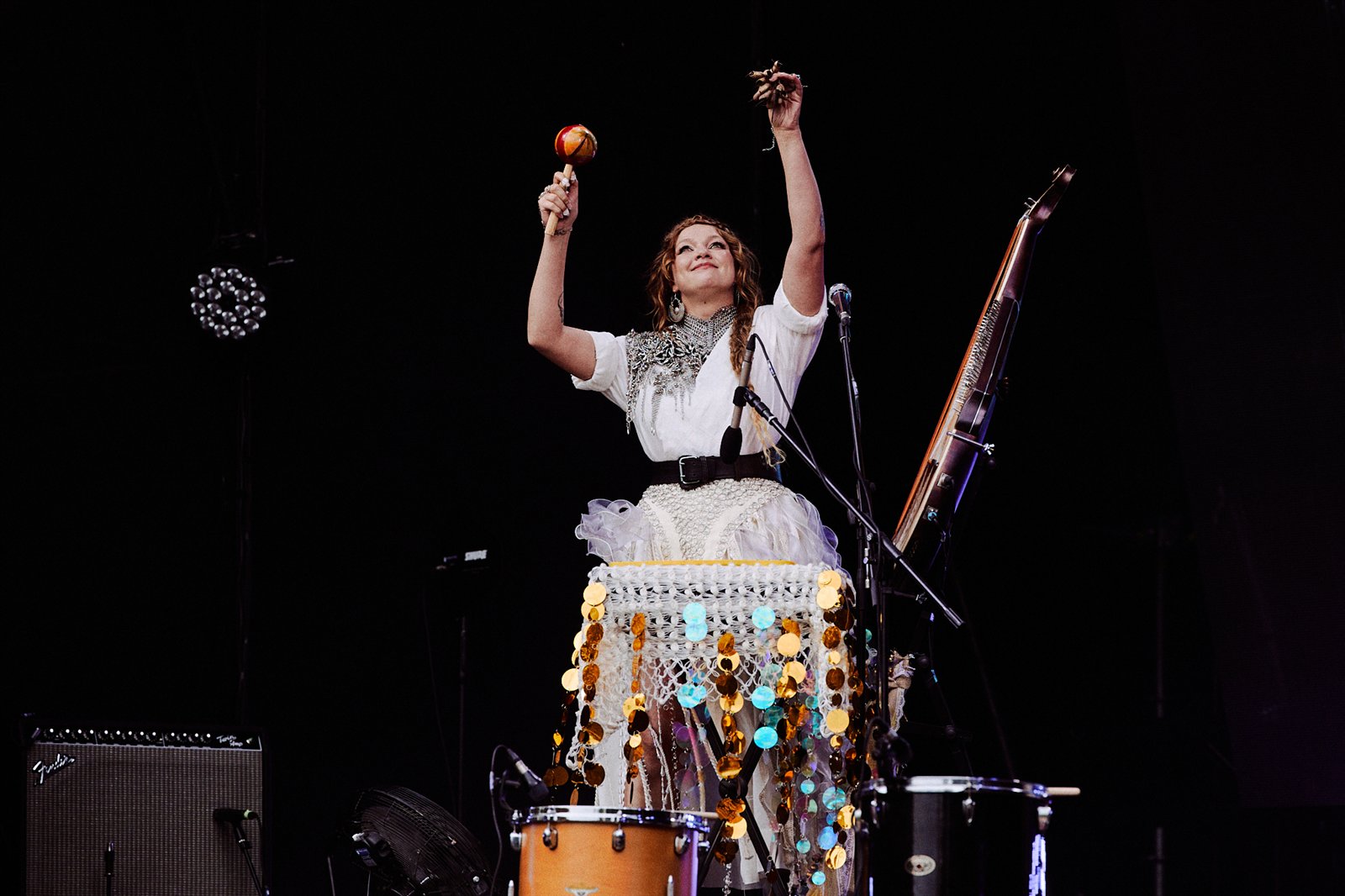
Bandura player and singer Maryna Krut spent six months preparing a separate programme for the festival and played it with a new line-up for the first time. She wrote about it a few days before the event.
"Maryna Krut at Vyrii will sound somewhat different from what you are used to. We have been nursing this idea for six months and now we're happy to share it. A new electronic sound, an experiment and an exclusive first show with a new line-up and a completely new sound," the artist announced.
Electronics and drums joined the bandura in the programme, with a separate team working on the sound: a sound producer, an electronics player and a drummer.
"This had been a long-held dream of mine. To straighten up, stand up, dance, and have the audience dance too. I wanted to be different this time — to let my inner children out, to hit a drum, to do it not the way I usually make music, to change the approach," Krut wrote after the show.
Vakarchuk played a programme he will not repeat anywhere else
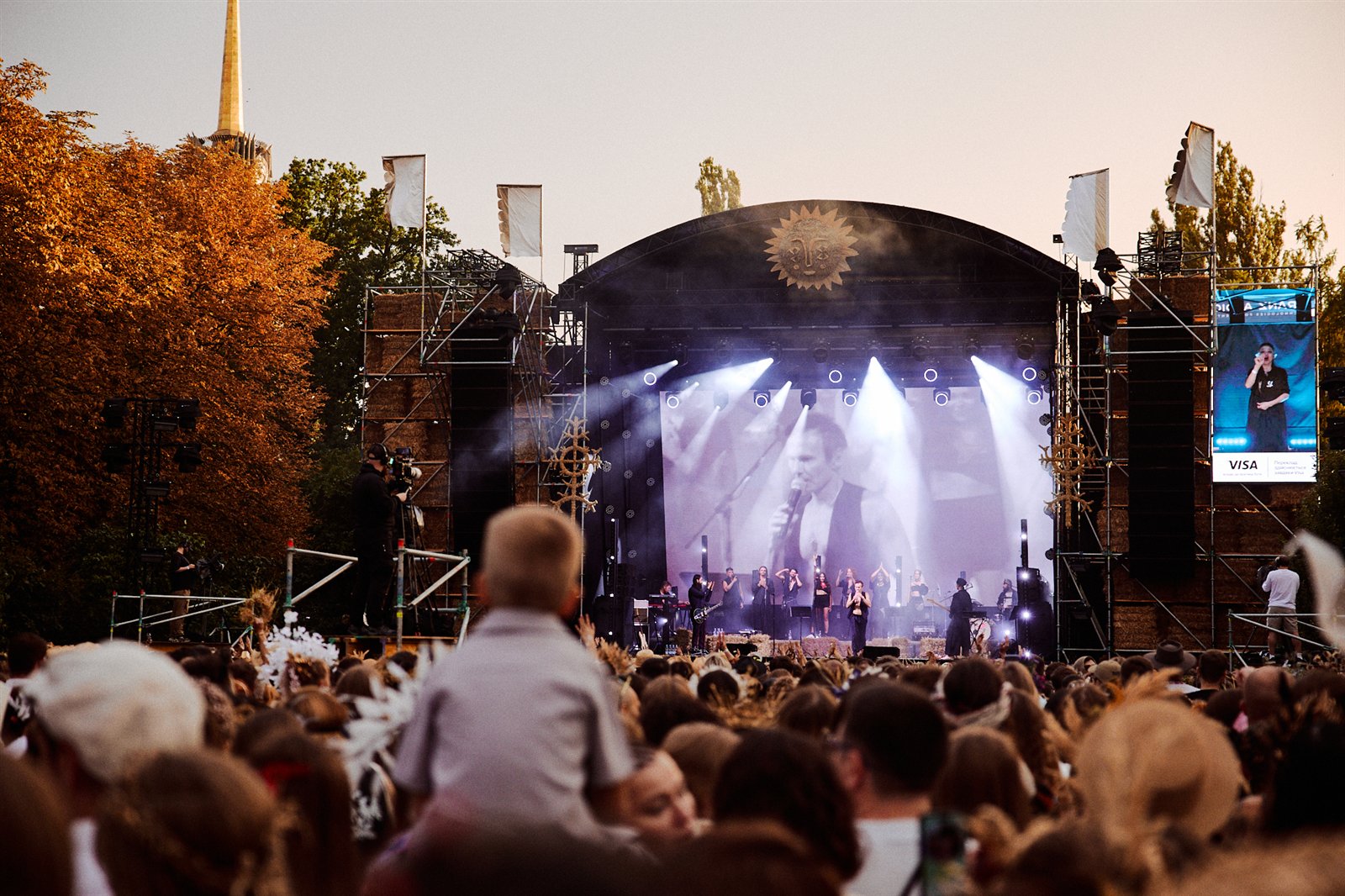
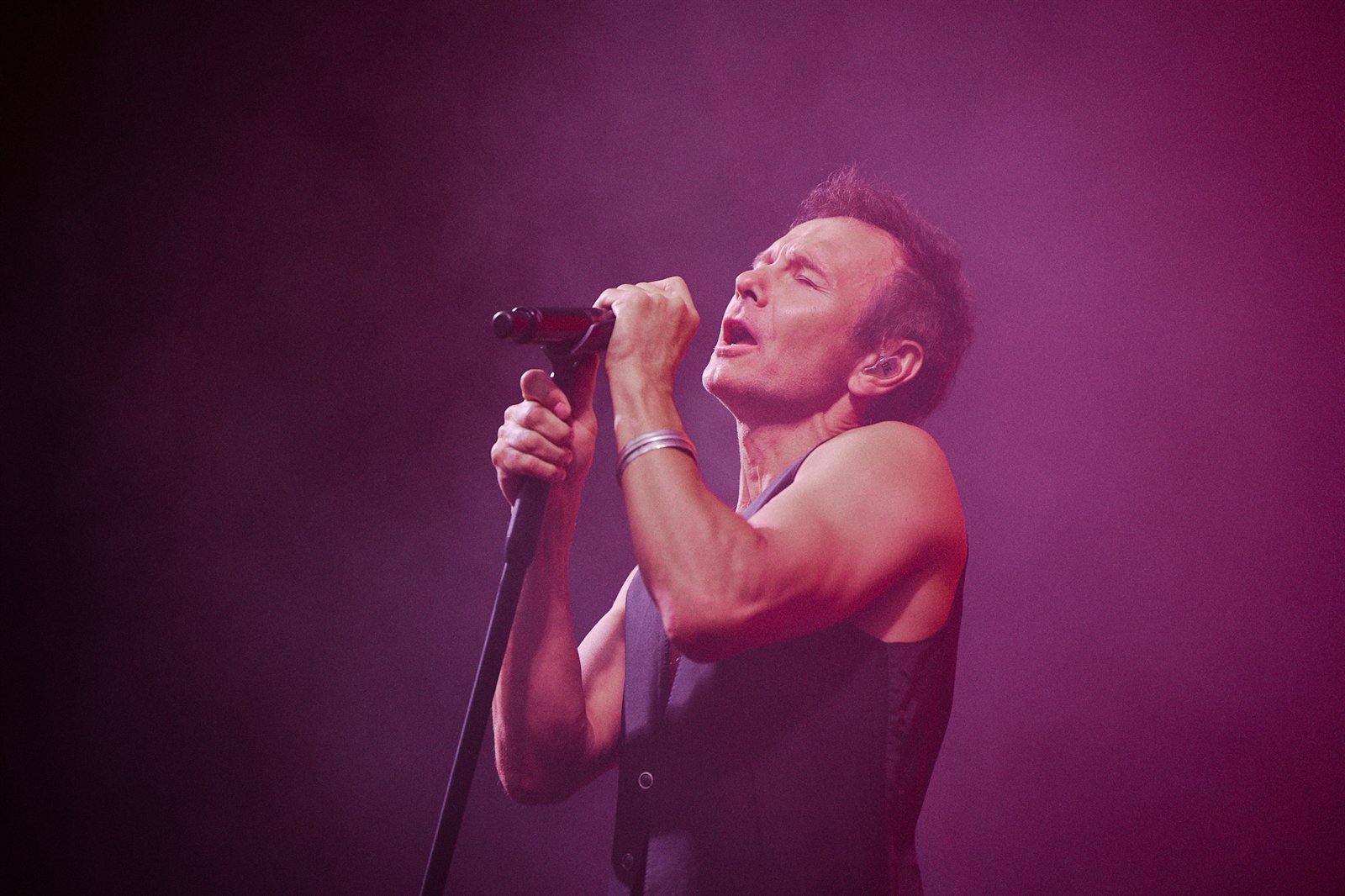
Sviatoslav Vakarchuk put together a separate concert programme for Vyrii and brought it to the live stage on the evening of 8 August.
"It was precisely the unique format and the unconventional nature of this event that inspired me to create a special concert programme. Today it will be heard only once — right here and right now," Vakarchuk wrote on his social media.
The fifteen minutes that out-argued social media
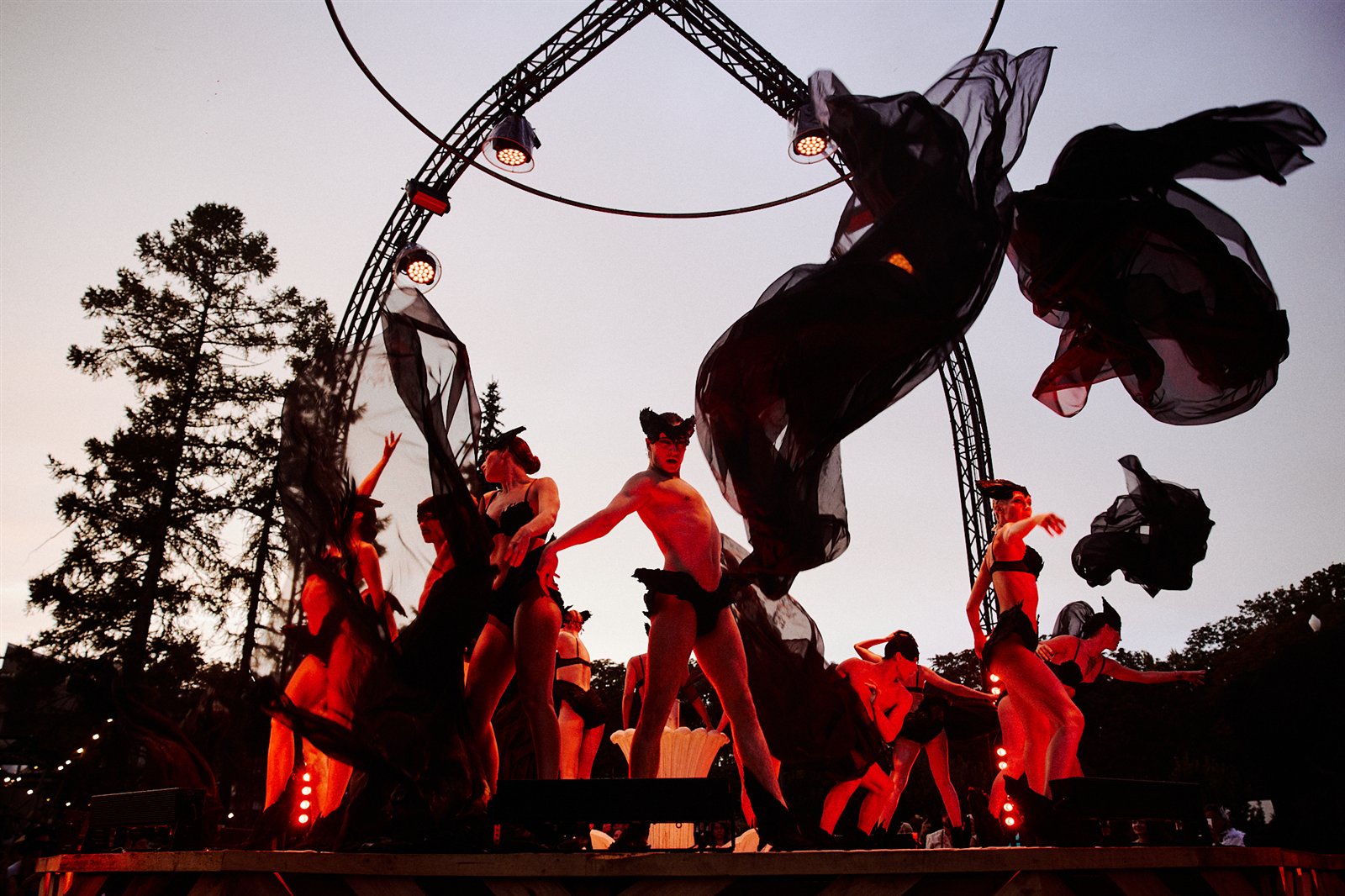
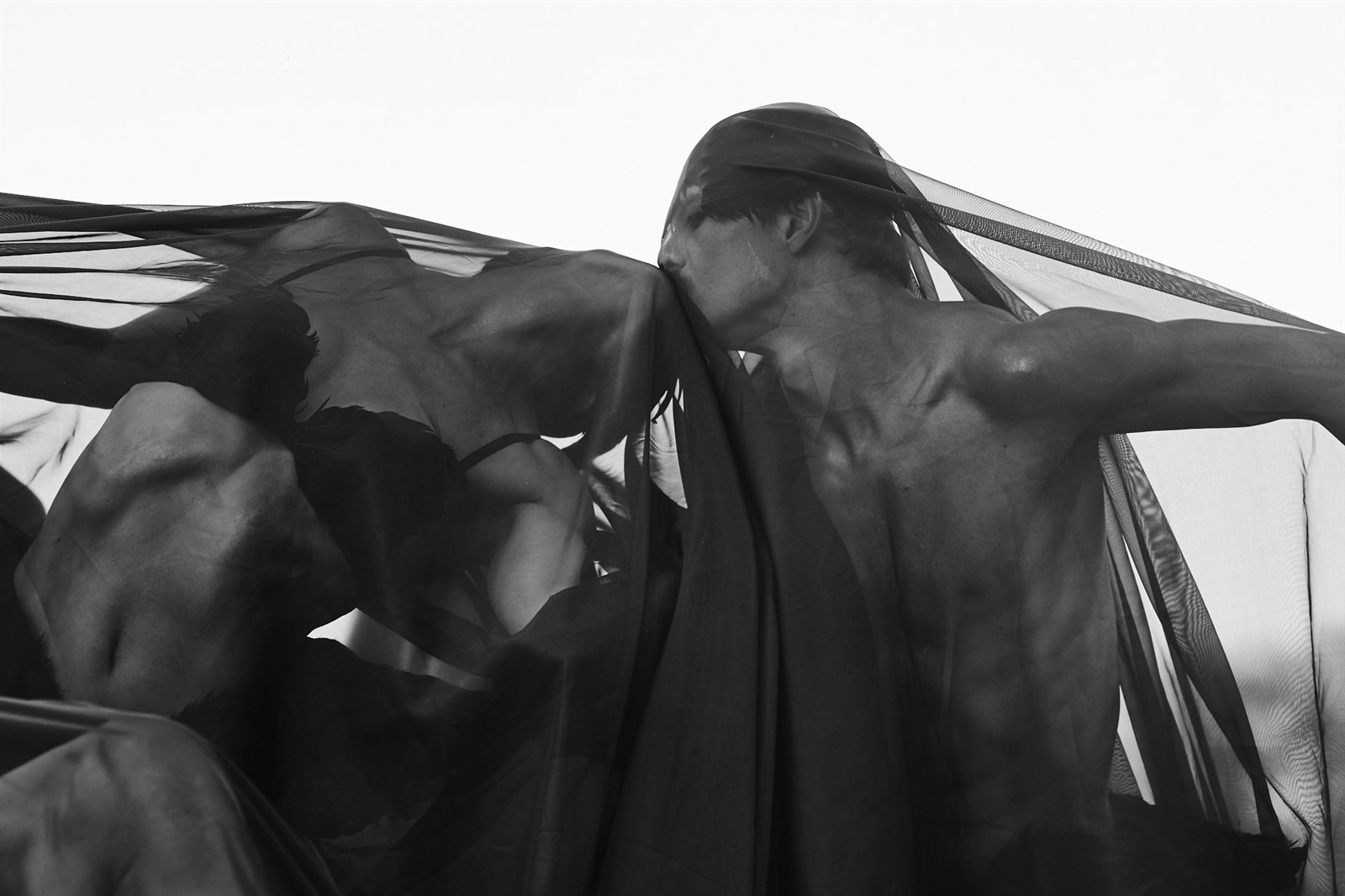
A separate performance programme came from Freedom Ballet. The piece ran about fifteen minutes on the electronic stage, and it began before the stage: performers in cloaks moved through the festival grounds, and that walk was already part of the staging. There was no clear line between preparation and start — the show grew out of the site itself.
"They appeared on the electronic stage for only 15 minutes — dark birds in the middle of the crowd. The movement, the costumes, the light, the music. So beautiful that you had better lower your phone and just watch," a NashKyiv reviewer wrote about the piece.
MUZVAR called it possibly the strongest point of the evening. It also collected the most argument: some social-media users started to associate the whole style of Vyrii with this one piece — even though the dress code had been announced as unbuttoned ethno, wildness, freedom and naturalness.
Photos: the Vyrii organisers
Twenty couples got married at the festival itself
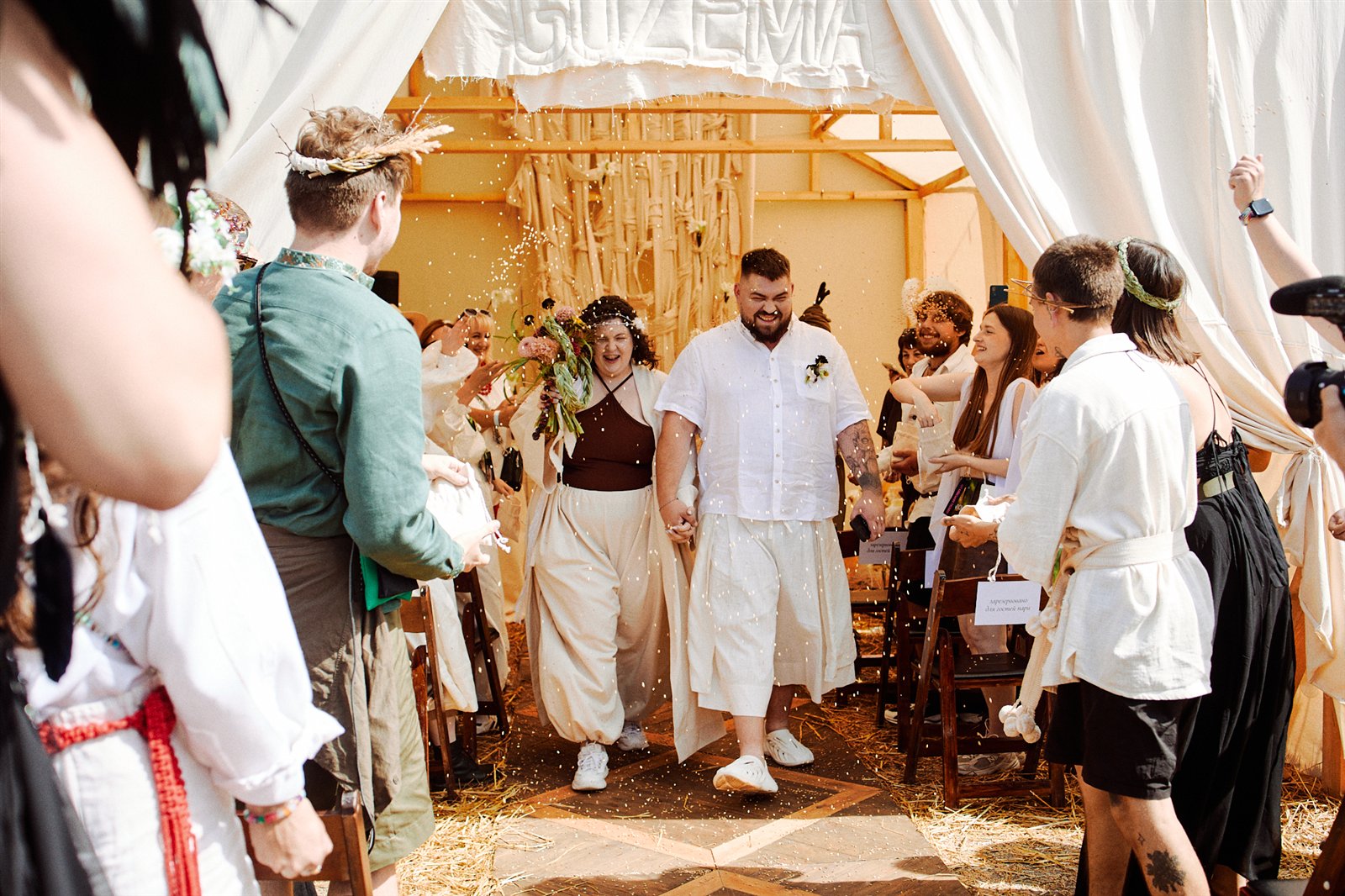
The main new feature of the second Vyrii was official marriages. The ceremonies were run together with Diia, the Ministry of Digital Transformation and the Ministry of Justice, so the registrations had full legal force. The space was built by the jewellery brand GUZEMA: a wedding arch, a master of ceremonies, a photographer and seats for guests, with every couple receiving gold rings designed specially for the event.
Before the festival the organisers planned at least 12 ceremonies. Over two days they registered 20. Anyone could also marry symbolically in a walk-up queue, and couples already married could renew their vows.
The idea came from the guests themselves: last year some couples deliberately scheduled weddings for the Vyrii dates — signing at the registry office in the morning and then arriving at the festival with friends and family.
A dress code almost everyone kept
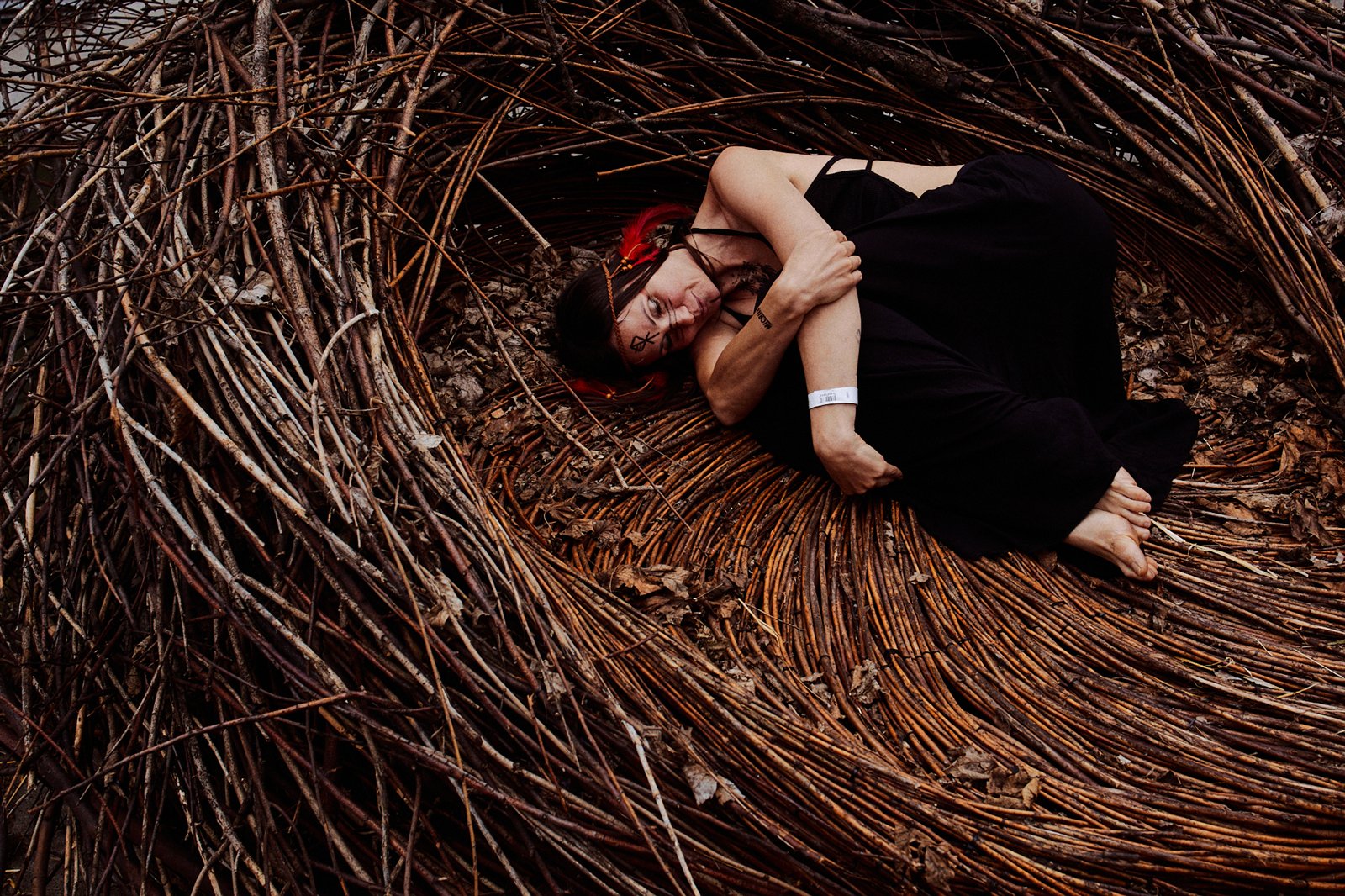
The dress code remains a compulsory condition of entry. This year the organisers described the direction as unbuttoned ethno, naturalness and freedom: no historically accurate folk costume and no expensive outfits, but linen, embroidered shirts, long skirts, wide trousers, capes, headscarves, belts and handmade jewellery.
Out of 17,000 guests, only around 300 turned up in everyday clothes.
A theatre programme you could not watch in full
The theatre part was curated by director Ivan Uryvskyi, with Tetiana Kostyniuk and Maksym Svets working on the programme. It was built on motifs from Olha Kobylianska's novella On Sunday Morning She Gathered Herbs — not retelling the text literally, but using it as a starting point.
The stagings were spread across five zones of the festival and ran about five hours a day. Seeing all of it was impossible: while one zone played out an episode, something entirely different was happening in another, so every guest assembled a personal version of Vyrii from the fragments they caught.
ONUKA joined The Maneken on a sopilka
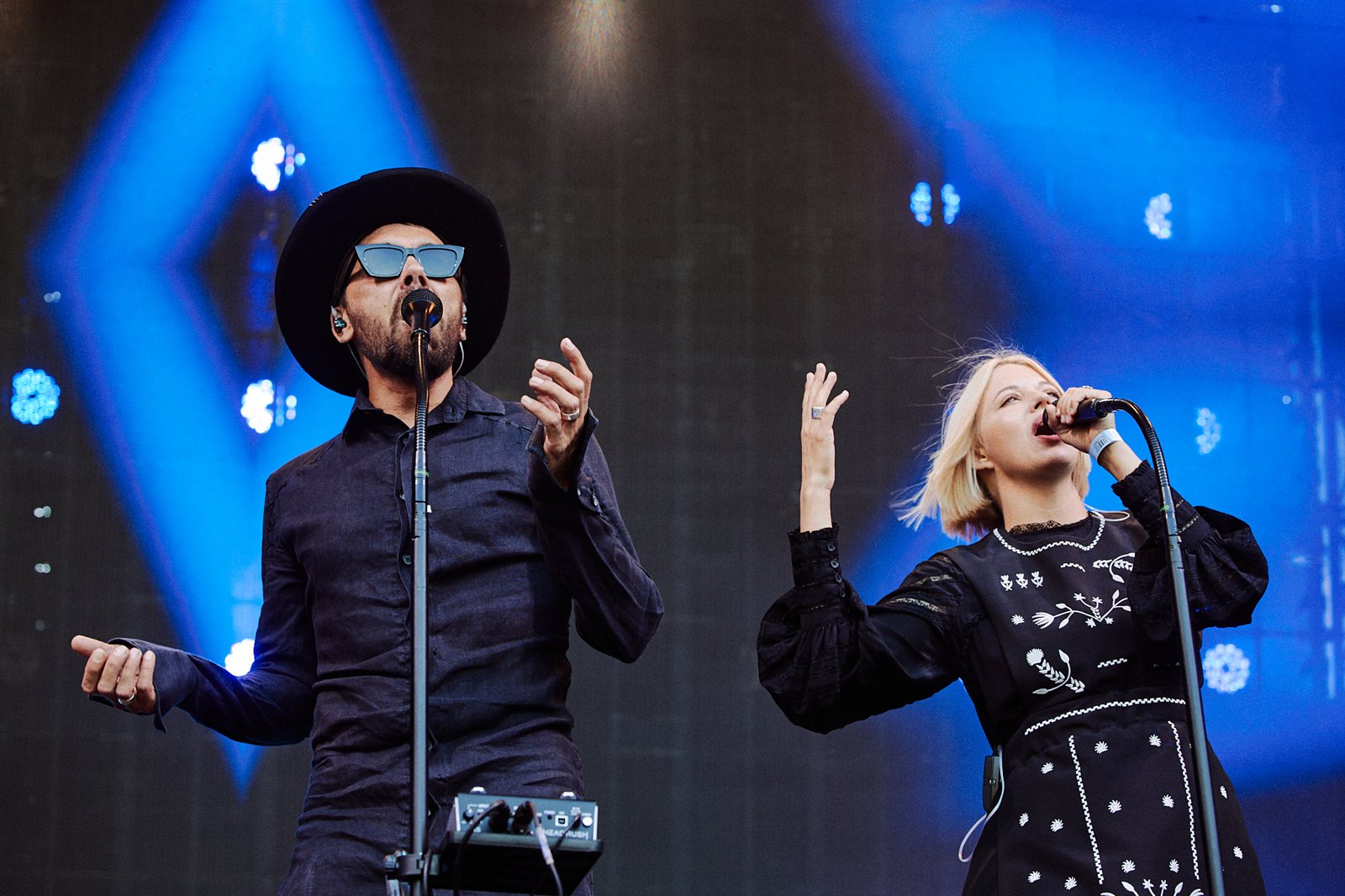
The most touching moment of day two was the appearance of ONUKA during The Maneken's set. Yevhen Filatov, who is behind the project, introduced Nata Zhyzhchenko — ONUKA's frontwoman — as the person he cannot imagine his life without. She first joined delicately on the sopilka, a Ukrainian wooden flute, and later added vocals.
The Maneken's line-up on stage also included trumpeter Dennis Adu, Dasha Minieieva and DIMA LIBRA. Sviatoslav Vakarchuk came to watch — fittingly, since one track on Filatov's new album uses a sample from Okean Elzy's song "Kvitka".
Vivienne Mort explained why she rarely plays live
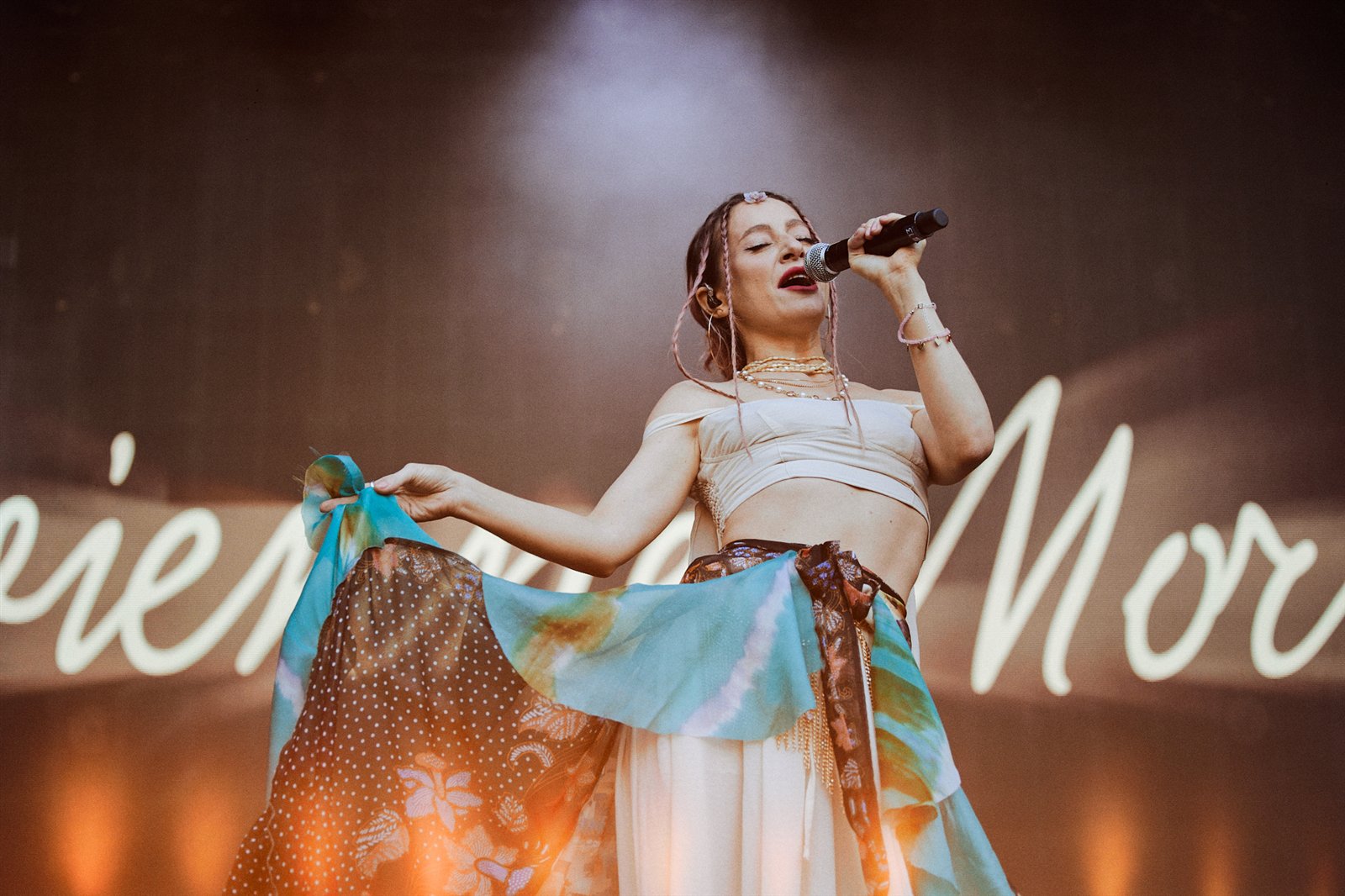
Before her set, Vivienne Mort frontwoman Daniela Zaiushkina told the audience why she has performed so rarely of late: a person very close to her was severely wounded at the front and is going through difficult rehabilitation in Dnipro. She read the text from her phone.
After that the concert stopped feeling like another melancholy set. She also asked listeners to pay closer attention to what the songs are about — in particular the track "Skhidnyi Ekspres", which on the surface tells a love story but is really about the war. This was described in the report from day two.
Criticism — and the organisers' answer
After the festival, people online started reproaching Vyrii for the absence of a visible charity component. Alina Mykhailova, head of the medical service "Ulf" of the Da Vinci Wolves battalion, published a post in which she stressed that she is not calling on Ukrainians to stop living or celebrating, but believes it matters to remember the price of an ordinary life. She also noted that the festival fell on the same day as the funeral of Oleksii Yukov — founder of the Platsdarm search unit, who for more than 25 years searched for and returned the bodies of the fallen.
"It is not the festival that frightens me. What frightens me is the normalisation of the abyss. When some Ukrainians have been living for years in a world where 'today was a good day' means everyone of yours came back alive. And others live in a world where the war has become an inconvenient notification on the phone between work, a restaurant and a party," the post reads.
Organiser Alona Hudkova replied that Vyrii is a loss-making project, and that the money for charity is given by Kurazh.
"We finished the last [Vyrii] 9.5 million in the red. That's right, it was a debt that Kurazh paid off, I severely cut my own earnings and spending, and in general this is the cost of investing in cultural projects. I took the risk, that was my responsibility," she wrote on Instagram.
Producer Anastasiia Maksymova added that last year the production was extremely expensive because of the sets and costumes, so there was no profit. This year the team plans to assess the financial result and, if possible, pass part of the money to charity. According to her, roughly 20% of all tickets were concession tickets.
Targeted fundraising did work at the festival: guests could get a portrait or a tattoo for a donation, and Krykhitka put a fundraising QR code up straight from the stage.
What comes next
Vyrii was built as a barrier-free event: a gently sloping main entrance, accessible toilets, a lowered food-court counter, a separate feeding room, a platform for guests with reduced mobility next to the stage, quieter areas without extra speakers and earplugs on sale. Every performance on the live stage was accompanied by Ukrainian sign-language interpretation.
The team is already preparing a third Vyrii — the details are promised later.
As ONE//FM reported earlier, another Kyiv festival this summer gathered more than 70 names on the grounds of the Dovzhenko Film Studio.
Read also

He hid his face under a robot helmet for twenty years: Daft Punk’s co-founder explains why AI does not interest him

He closed the Tomorrowland Mainstage alone — and dedicated the set to the brother who was not there
DOROFEEVA counted down the steps to the premiere on her own channel — and released ‘747’
The album Brian Eno wrote for airports will finally be played in one — live, by a chamber ensemble

Four forty-six with no concession to radio: HUGEL has released ‘One More Round’

Catching Flies returned to the Californian town where his album began — this time with TEED alongside him

‘Mission Passed’: Kyiv has just finished a three-day techno festival played like a video game

Lane 8 is finally making it to Poland — for the first time in his career, and phones will have to go away
Comments
Loading…